Upright meaning
Allow yourself to feel the full weight of loss without rushing to fix it. Naming your pain is the first step toward clearing the fog.
 Tarovia
Card meanings
The Three of Swords is often read as a card of pain, honest recognition, and release. It does not tell you what another person feels or what must happen next. In a reflective reading, it can make room to name what hurts, notice what is known, and choose a pace for responding.
Keywords: Grief · Clarity · Release
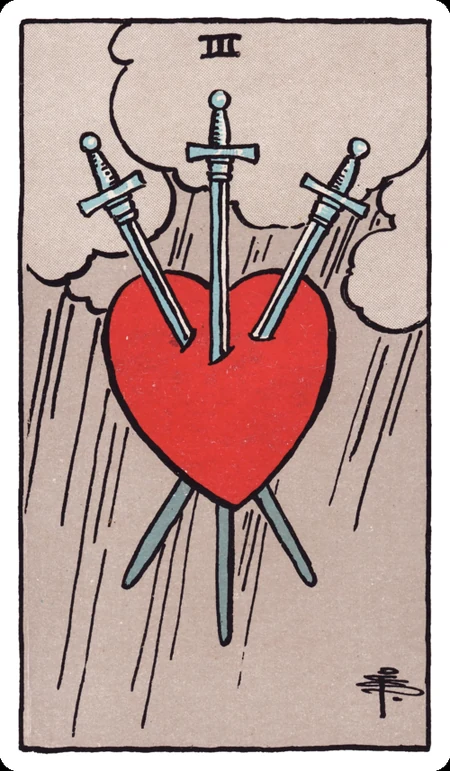
In the Rider–Waite–Smith image, a red heart is pierced by three swords beneath dark clouds and falling rain. There are no figures to explain the scene, leaving the image open to reflection rather than a single story. You might use the contrast between the exposed heart and sharp blades to consider how a difficult truth has affected you, while distinguishing the pain itself from assumptions about its cause.
Allow yourself to feel the full weight of loss without rushing to fix it. Naming your pain is the first step toward clearing the fog.
You may be avoiding the truth to protect yourself from further hurt. Healing requires facing the wound rather than burying it deeper.
This card cannot establish what the other person thinks or whether a connection will end. Focus on what has actually been said or done. If something hurt, write down the moment, its impact, and what you would like to communicate without assuming the response.
Separate the event from the conclusion you have drawn about yourself. Note what feedback is specific and useful, then identify one person or resource that could help you address it. Give yourself time before turning disappointment into a fixed judgment.
Consider whether an important feeling or fact has been left unspoken. You could first name it privately, then decide whether a conversation would be safe and useful. You do not have to disclose everything at once; choose a boundary and a next step that feels manageable.
Set a timer for five minutes and write freely about what hurts, without editing or deciding what it means. Underline one sentence that feels most honest, then choose whether to keep it private, share it with someone you trust, or revisit it later.
What emotion are you holding back that needs to be spoken aloud?
A. E. Waite’s 1911 description of Three of Swords
Tarovia’s interpretations are original reflective writing. This historical source is linked for context, not as a certain prediction.
Tarot is for reflection and entertainment. These interpretations do not predict a certain future or replace professional advice.